
Black Sideboards: The Complete Buyer's Guide to Vintage, Antique & Reclaimed Pieces

2026-04-22
Black Sideboards: The Complete Buyer's Guide to Vintage, Antique & Reclaimed Pieces
Spotlight on Black Sideboards

Black Sideboards:
The Complete Buyer's Guide

Dramatic, versatile, and enduringly elegant — a black sideboard anchors a room like nothing else. Whether you are looking for an ebonised Victorian piece, an Art Deco lacquer cabinet, or a painted reclaimed sideboard, this guide covers everything.

Why vintage beats new: A genuine ebonised Victorian sideboard or painted antique piece is made from solid wood that has already proven its durability over a century. The materials, construction quality, and character available in the vintage market simply cannot be matched by new furniture at any equivalent price point.

Topics covered Black sideboard styles Ebonised sideboards Art Deco lacquer Painted antiques Sizing guide Room pairings Pricing guide
01

Why Choose a Black Sideboard?

Black sideboards have become one of the most searched for furniture pieces in the UK — and for good reason. Black is the rare colour that works across virtually every interior aesthetic, from traditional dining rooms and period properties to contemporary open-plan spaces and industrial lofts.

Unlike natural wood tones that fight with existing furniture, a black sideboard sits confidently in almost any room. It anchors the space without demanding coordination. It draws the eye without competing with other elements. And it provides a backdrop that makes almost everything placed on top of it — plants, art, lamps, ceramics — look better.


02

Styles and Periods

Black sideboards come in a wide range of styles and periods. Understanding the differences helps you search more accurately and recognise the best examples when you find them.

c.1901–1915 — Elegant
Ebonised Edwardian
Lighter and more restrained than Victorian equivalents. Ebonised Edwardian sideboards often feature inlaid satinwood stringing, tapered legs, and cleaner lines. Smaller in scale — better suited to modern homes. Good examples are frequently found at auction and in antique shops at accessible prices.
£200–1,800
c.1920–1940 — Dramatic
Art Deco Lacquer
High-gloss black lacquer, chrome handles, and bold geometric forms. Art Deco black sideboards are among the most striking pieces in this category. Often featuring stepped profiles, figured veneer panels beneath the lacquer, and luxurious hardware. Authentic examples are increasingly hard to find in good condition and command premium prices.
£500–8,000+ for authentic examples
c.1950–1970 — Understated
Black Mid-Century
Black-stained or lacquered mid-century sideboards — particularly Danish and Scandinavian pieces — have a cool, understated elegance. Tapered legs, clean horizontal lines, and sliding or drop-down doors. The contrast between a black-stained carcass and brass or chrome handles is particularly effective in contemporary interiors.
£250–2,500 depending on maker
Painted — Any Period
Black Painted Antique
Victorian pine, Georgian mahogany, and Edwardian oak sideboards painted black — either originally or by a subsequent owner — have enormous popularity in the current market. Chalk paint, mineral paint, and traditional oil paint all give different finishes. Original painted examples in good condition are sought after; well-painted conversions offer excellent value.
£100–1,200 depending on base piece and quality of paint
Industrial / Reclaimed
Black Reclaimed
Reclaimed timber sideboards with a black oil, wax, or paint finish — increasingly popular for urban, industrial, and contemporary interiors. The combination of raw grain, knots, and nail holes under a black finish is a distinct aesthetic that new furniture cannot replicate. Often made to measure by specialist furniture makers using salvaged timber.
£300–2,000 depending on maker and spec

03

Room Pairings — What Works Where

A black sideboard is more versatile than most buyers initially expect. While the dining room is the obvious home, the best examples work throughout the house.

Dining room
The natural home
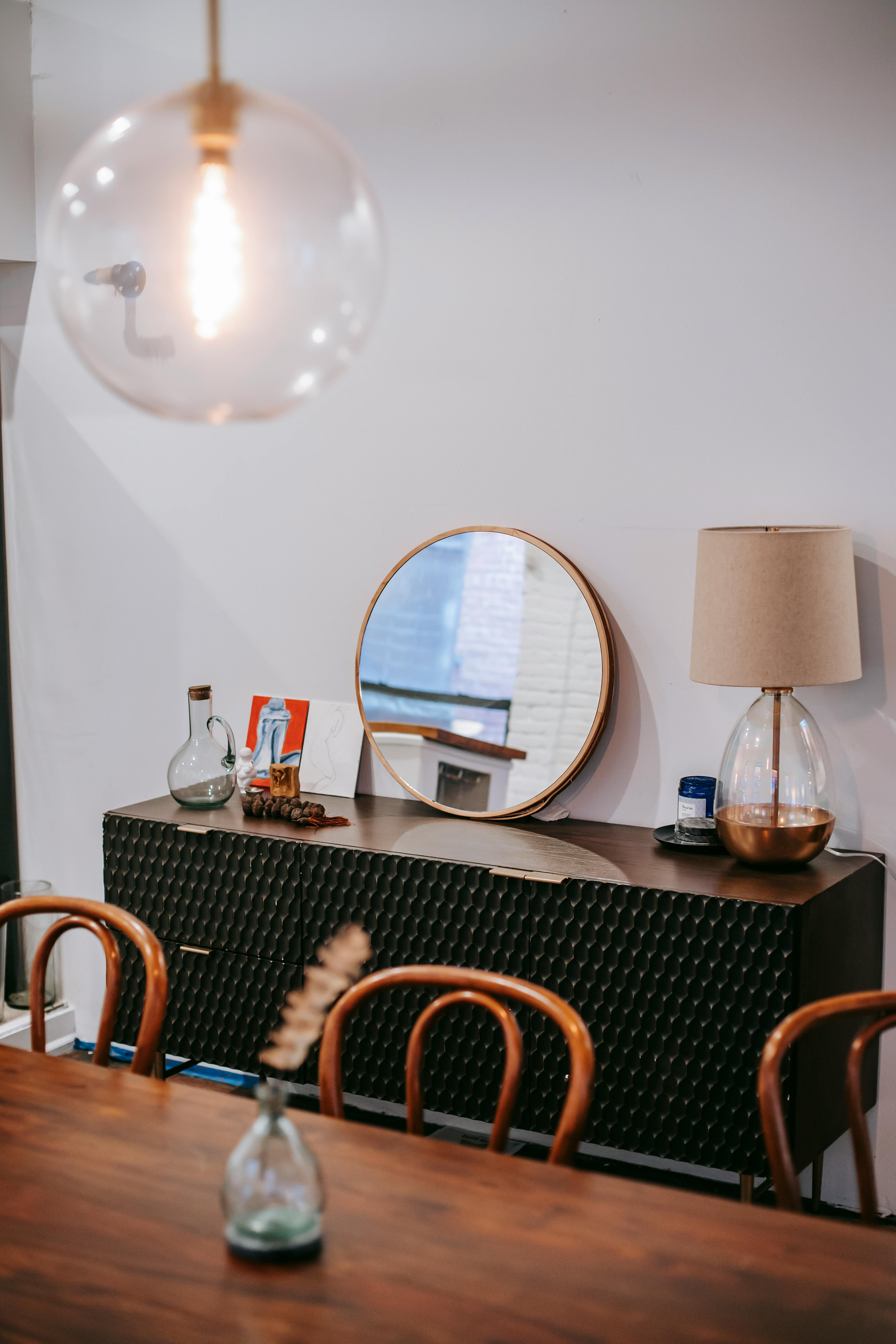
A black sideboard in a dining room provides practical storage — crockery, linen, glassware — while making a strong visual statement. Pairs beautifully with a natural oak or walnut dining table where the contrast between the black sideboard and the warm wood table creates balance without matching.
Hallway
First impression
A black sideboard in a hallway sets the tone for the entire house. Narrow Edwardian examples in ebonised wood or smaller painted Victorian pieces work perfectly against a hallway wall. Add a mirror above and a lamp on top for a complete and considered entrance.
Living room
Statement storage
Used in place of a media unit or as a drinks cabinet, a black sideboard anchors a living room wall. The top surface works as a display shelf for art, plants, and objects. Mid-century black pieces work especially well in living rooms where a more formal sideboard might feel out of place.
Home office
Functional and elegant
A low black sideboard used for storage in a home office brings a considered, interior-design quality to a functional space. Far more characterful than flat-pack storage units and surprisingly practical — the top surface works as additional desk space or a printer stand.
Kitchen diner
The unfitted kitchen
The trend away from fully fitted kitchens toward a more unfitted, furniture-based approach has made black sideboards extremely popular in kitchen diners. A black sideboard provides pantry storage and display space while adding the kind of character a fitted unit cannot.
Bedroom
Unexpected elegance
A black sideboard used as a low dresser or TV cabinet in a bedroom works particularly well in rooms with neutral or white walls. The visual weight grounds the room and the piece provides substantial storage that a standard chest of drawers does not.

04

Vintage vs New — The Honest Comparison

Most buyers searching for black sideboards will encounter both new production and vintage pieces. The comparison is clearer than many people expect.

  • MaterialsVintage and antique sideboards are made from solid wood — oak, mahogany, walnut, pine. New sideboards at similar price points are almost universally MDF with veneer or foil wrap. Solid wood is heavier, more durable, repairable, and ages better in every respect.
  • ConstructionDovetail joints, mortise and tenon, hand-cut details — the joinery in a Victorian or Edwardian sideboard has already survived 100+ years. New furniture uses screws, cam bolts, and glue. The structural difference is significant and observable by anyone who looks closely.
  • Value retentionA vintage sideboard bought well holds or grows in value. New furniture from mainstream retailers depreciates immediately and significantly. A well-chosen black painted antique sideboard bought for £400 will be worth at least that in five years — a new equivalent will be worth considerably less.
  • CharacterThe grain, patina, slight irregularities, and history of a genuine vintage piece cannot be manufactured. Every mark, every slight variation in the paint, every original handle is evidence of a real history. New furniture, however well designed, is anonymous.
  • SustainabilityA vintage sideboard carries zero new manufacturing carbon. Choosing reclaimed or vintage over new is one of the most impactful sustainable decisions a buyer can make in furnishing a home.
  • Size and proportionVictorian and Edwardian sideboards were made for large Victorian and Edwardian dining rooms. They can be substantial — always measure your space before buying. Edwardian pieces and smaller chiffoniers are more suited to modern room proportions.
The verdict: At any price point above £200, a carefully chosen vintage or antique black sideboard will almost always outperform a new equivalent on quality, durability, character, and long-term value. The reclaimed and antique market gives you access to materials and craftsmanship that simply do not exist in new furniture.

05

Sizing and Proportion Guide

Getting the size right is the most practical decision in buying a sideboard. Too large and it overwhelms the wall; too small and it looks lost. These guidelines work for most rooms and dining tables.

Dining table lengthRecommended sideboard widthNotes
Up to 150cm (seats 4–6)80–110cmSmaller chiffonier or narrow sideboard — Edwardian pieces work well
160–180cm (seats 6)100–130cmStandard sideboard — the most common format in the vintage market
180–220cm (seats 8)130–160cmFull-size sideboard — many Victorian pieces fall in this range
220cm+ (seats 10+)160–200cmLarge Victorian or server-style sideboard — measure doorways carefully
Hallway use80–120cmDepth is critical — allow 35cm minimum for a usable top surface
Height matters: Standard sideboard height is 80–90cm. This aligns with dining chair seat height and allows practical use of the top surface. Lower mid-century pieces at 65–75cm work better in living rooms and bedrooms. Always measure your wall height too — tall Victorian pieces with mirror backs can reach 180–200cm and require a generous ceiling height to work well.

06

Handles, Legs, and Hardware

The hardware on a black sideboard makes an enormous difference to the overall effect. It is also the easiest and most cost-effective way to transform a piece you already own.

  • Brass handlesThe most popular pairing with a black sideboard right now. Warm antique brass or unlacquered brass develops a natural patina that contrasts beautifully with a flat or satin black finish. Works with Victorian, mid-century, and contemporary pieces equally well.
  • Chrome or nickelCool, precise, and elegant. Chrome handles on a black Art Deco piece are the definitive combination. Also works well on black mid-century Scandinavian pieces where the overall aesthetic is more restrained.
  • Black ironMatching black hardware on a black sideboard sounds counterintuitive but works extremely well on rustic, industrial, and reclaimed pieces where the texture contrast between matte black iron and black painted wood adds depth rather than confusion.
  • Ceramic or porcelainWhite or cream ceramic handles on a black sideboard create a fresh, graphic contrast. Popular on black painted farmhouse and cottage-style pieces. Easy to source as replacements if original handles are missing or damaged.
  • Original ring pullsA Victorian ebonised sideboard with its original brass ring pulls or lion head handles is a complete piece that should not be altered. Original hardware in good condition adds significantly to the value and character of a piece.
  • Tapered legsOriginal tapered wooden legs on a mid-century piece should be preserved and, if damaged, carefully repaired rather than replaced. The leg profile defines the period identity of the piece. Replacement legs in a different style fundamentally change the character of a mid-century sideboard.

07

How to Sell a Black Sideboard

Black sideboards sell well on The Reclaimed Company Marketplace. Buyers search specifically — style, period, size, and hardware all matter to them. Accurate description and good photographs are the difference between a fast sale and a slow one.

  • Title: colour, style/period, material, key feature, location — "Black Ebonised Victorian Sideboard — Original Brass Handles — Leeds"
  • Dimensions: width, depth, height in centimetres — always include depth as it is the most frequently omitted measurement
  • Finish: original ebonised, painted, lacquered, or oiled — and if painted, what paint was used
  • Wood: what is beneath the finish — oak, mahogany, pine, or mixed/unknown
  • Hardware: original or replacement — if original, describe condition; if replaced, describe what was used
  • Condition: honest description of any marks, repairs, ring stains on top, scratches in the finish
  • Disassembly: state whether the piece can be partially disassembled for delivery — buyers in upstairs flats need to know this
Pre-listing checklist
  • Style and period identified — ebonised, painted, lacquer, mid-century
  • All three dimensions measured — width, depth, height
  • Wood species identified or noted as unknown
  • Finish described — original or applied, paint type if known
  • Hardware described — original or replacement, material
  • Condition noted honestly — top surface, paint condition, structural integrity
  • Photos taken — front, top surface, interior, hardware detail, any damage
  • Disassembly options confirmed for delivery

08

Pricing Guidance

Black sideboard prices in the UK reclaimed and antique market vary significantly by period, quality, and condition. The table below covers the most commonly traded categories.

StylePeriodConditionPrice guide
Ebonised Victorian — small1860–1900Good original£300–900
Ebonised Victorian — large1860–1900Good original£600–3,500
Ebonised Edwardian1900–1915Good original£200–1,200
Art Deco lacquer1920s–1940sGood original£500–8,000+
Black painted antique — pineVariousWell painted£100–600
Black painted antique — oak / mahoganyVariousWell painted£200–1,200
Black mid-century — Danish / Scandinavian1950s–1970sGood original£250–2,500
Black reclaimed timberContemporary makeNew£300–2,000
Victorian mirror-back sideboard — ebonised1870–1900Good original£500–4,000

09

Frequently Asked Questions

What styles of black sideboard work best in a dining room?

An ebonised Victorian sideboard works beautifully in a traditional or maximalist dining room, bringing drama and period character. An Art Deco lacquer piece with chrome handles suits a bold, glamorous interior. A painted mid-century sideboard works in both contemporary and eclectic spaces. For modern or industrial dining rooms, a black-painted reclaimed sideboard with raw timber grain showing through the finish creates a striking, characterful statement.

What is an ebonised sideboard?

Ebonising is a finishing technique that gives wood the appearance of ebony — deep black with a slight grain showing through. Victorian and Edwardian cabinet makers used ebonising extensively on sideboards and display furniture. The process typically involves staining the wood with iron acetate or similar solutions and polishing to a deep sheen. Genuine ebonised Victorian and Edwardian sideboards are increasingly collectable.

Is it worth buying a vintage black sideboard rather than a new one?

Almost always yes. A vintage or antique black sideboard is made from solid wood rather than the MDF used in most modern furniture at equivalent price points. It has proven its durability over decades. And unlike new furniture which depreciates immediately, a genuine vintage piece holds or grows in value. The character of aged paint, original handles, and solid wood construction cannot be replicated by new production.

Can I paint an antique sideboard black myself?

Yes — but research whether the piece has collector value in its original finish first, as painting a genuinely valuable antique reduces its value significantly and is difficult to reverse. For a standard Victorian pine or Edwardian oak sideboard, a good quality chalk paint or mineral paint in black works very well. Prepare the surface properly — clean, sand lightly, and prime if painting over a dark original stain. Quality of application makes an enormous difference to the final result.

What size black sideboard do I need for my dining room?

A general rule is that your sideboard should be no longer than two thirds the length of your dining table. For a standard 180cm table, a sideboard of 110–130cm is comfortable. Standard height is 80–90cm. Always measure your wall space and allow at least 60cm clearance in front for door and drawer opening. Always measure doorframes and corridor widths before purchasing — Victorian sideboards can be wide and deep.

Find your black sideboard today

Browse ebonised antiques, painted vintage pieces, and reclaimed black sideboards from dealers and sellers across the UK — or list yours and connect with buyers who know exactly what they want.